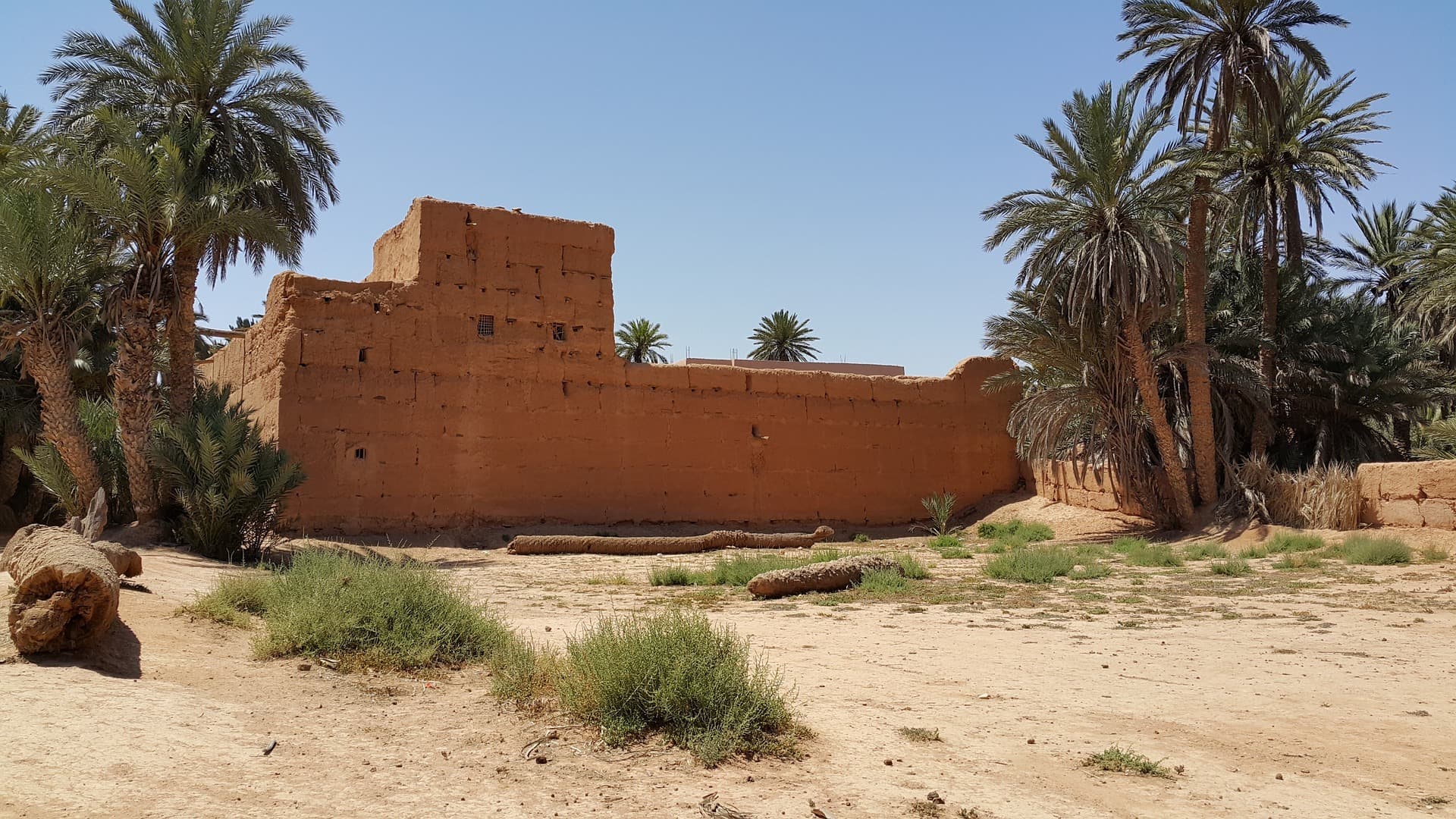
Goulimine
Goulimine
Once a vital caravan crossroads, Goulimine opens the doors to the Moroccan Sahara, where camel markets, hidden oases, and Hassani traditions converge.
Goulimine sits in southwestern Maroc, just thirty kilometers from the Atlantic Ocean, two hundred kilometers from Agadir, and one hundred ten kilometers from Tiznit. The town is now officially called Guelmim. It earns the title "Gateway to the Sahara" for its strategic geographical position. Once a thriving caravan hub, Goulimine remains a vital commercial crossroads where desert travelers and local communities exchange goods and culture. The region's climate is characteristically dry and arid, though ocean proximity tempers the extremes. Winter temperatures average around 12°C but can dip below 5°C, while summers typically reach 30°C, sometimes climbing above 40°C.
Goulimine hosts Maroc's most important camel market. Arabic dominates, though the local Hassanya dialect prevails. Several tribes have historically settled in the surrounding area, including the Aït-Moussa-Ali, Aït Oussa, and Awal Jalla. Agriculture remains the economic backbone, centered around the oases of Abaynou, Zriouila, Tighmert, and Asrir, where date palms flourish. The town is remarkably rich in history and archaeology—ancient caves, carved rock formations, historic kasbahs, and hidden chambers reward curious explorers with glimpses into centuries past.
Craftsmanship is woven into Goulimine's identity, reflecting the customs and spirit of its people. The region's jewelry is internationally acclaimed for its meticulous work with precious metals, especially silver, crafted into stunning earrings, rings, bracelets, and ornamental dagger and rifle fittings, along with delicate ankle chains. Leather goods—cushions, tobacco pouches, and goatskin bags—are equally prized. Woodcarvers fashion ajdari and acacia wood into beautiful serving dishes and spoons, while traditional seamstresses and carpet weavers continue ancient techniques. These artisanal pursuits form a significant part of the town's economy.
Tourism is flourishing in Goulimine. North of town lies the Abaynou thermal station, where those seeking wellness cures or simple relaxation can immerse themselves in rejuvenating waters reaching 39°C—renowned for soothing skin conditions and rheumatism. East along the Assa road, Tighmert beckons with its stunning oasis, homestays with locals, and an eco-museum offering authentic cultural immersion. Heading toward Tata, ancient monuments and burial sites reveal layers of regional history, while the heights of Taghjirjt deliver panoramic views overlooking the Dar Es Soltan citadel. Consider a camel or mule trek through the valley toward Tan-Tan, where fine-sand beaches and brilliant desert light create an enchanting backdrop for spotting the region's impressive diversity of fauna and flora.
For ultimate seaside escape, head to Plage Blanche (White Beach), forty kilometers from Goulimine—a seemingly endless shoreline of pristine white sand kissed by turquoise waters, perfect for swimming and water sports. An ambitious development project, "Plan Azur," is underway, bringing multiple hotels, resort residences, restaurants, souks, 18-hole golf courses, equestrian clubs, a thalassotherapy center, and a water sports complex to transform the region into an extraordinary tourist destination. Goulimine is also home to captivating traditional dances, particularly the Guédra—an intensely physical performance primarily by women whose bodies shimmer and undulate until they reach a trance-like state, ceasing only when exhaustion overtakes them. The town's vibrant souk stocks everything imaginable, staying open late into the evening. This region of Maroc holds countless discoveries and offers unforgettable excursions for every type of traveler.
Want to discover this destination?
Our local advisors design your tailor-made trip.