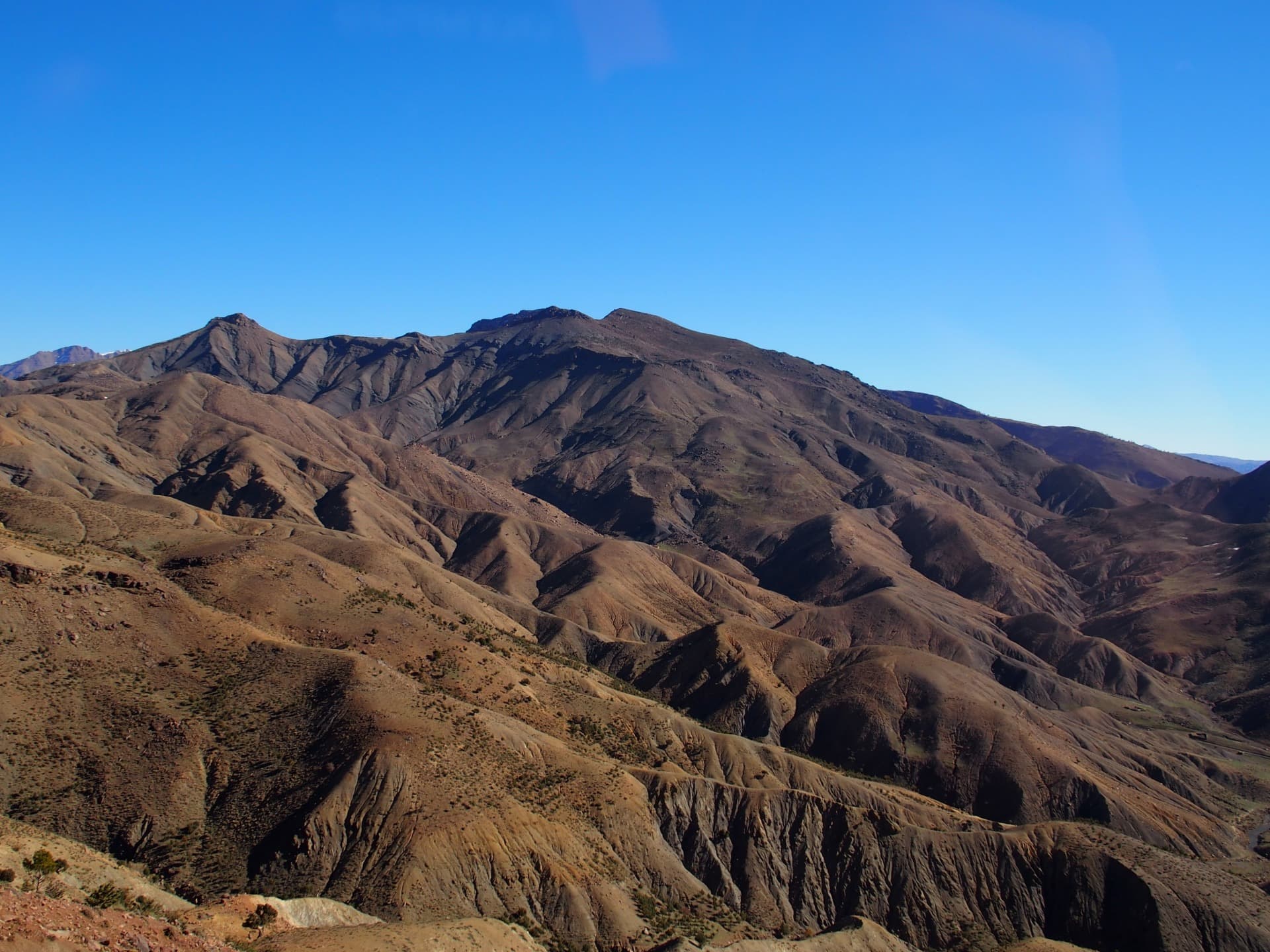
Central High Atlas
Breathe in a breath of fresh air by setting off on an expedition into the Central High Atlas. Go hiking, marvel at biodiversity, discover Berber life. Here's your guide.
Breathe in a breath of fresh air by setting off on an expedition into the Central High Atlas. Go hiking, marvel at biodiversity, discover Berber life. Here's your guide.
Central High Atlas
Wondering where to go in the High Atlas?
Whether you're a nature lover or a hiking enthusiast, why not venture to the second major mountain range in the Atlas region of Maroc? Come discover the exceptional biodiversity of the Central High Atlas while enjoying a breath of fresh air.
As a family, with friends, or as a couple, this destination promises both relaxation and discovery.
Prepare yourself to discover the distinctive way of life of the Berber population that calls this region home.
What is the Central High Atlas region in Maroc?
Finding yourself in the Central High Atlas feels like you're at the end of the world. This is indeed a vast limestone mountain range stretching approximately 120 km wide from Azilal to Ouarzazate. It is part of the High Atlas reliefs of Maroc, alongside the Eastern High Atlas and the Western High Atlas. It is the second most prominent mountain destination after the Toubkal massif.
Its highest peak is Djebel M'goun, which reaches 4,068 meters in altitude. It is here that you can contemplate the deep valleys where water flows ceaselessly.
Far from jagged terrain, you'll discover spacious valleys, including the famous Aït Bouguemez Valley, nicknamed the "Valley of Happiness".
Today, a renowned tourism destination
Highly prized by tourists, the Central High Atlas has become a destination of choice after the Toubkal massif. The Central High Atlas Project (P.H.A.C.), launched in the 1980s, transformed this mountainous region. Today you'll find numerous hiking trails, homestays, and high-altitude mountain huts on both the north and south slopes, ideal for your excursions.
The Geology of Mount Atlas
In the heart of the Central High Atlas, you'll discover an exceptional mountain landscape. It is characterized by its limestone formations, karst relief, and unique geological phenomena. During your visit, immerse yourself in deep canyons that will transport you to a mysterious world. Explore caves that bear witness to subterranean forces and admire rock formations. The high plateaus of this region also invite you to explore vast expanses dotted with limestone pavements and dolines.
A thriving ecosystem in Central High Atlas
Flora
At altitudes between 300 and 900 meters, a variety of vegetation flourishes, such as jujube trees, rockrose, gum trees, and wild olive. The first limestone foothills are covered with a carpet of euphorbias and doums, a type of dwarf palm. Higher up, Aleppo pines and holm oaks will not go unnoticed as they add beauty to the landscape.
Between 900 and 1,500 meters, you'll find Barbary thuyas, Phoenician red junipers, Aleppo pines, and oxycedrus junipers. Almond and walnut trees also dot the region. Certain areas host a variety of species such as Zen oak, yew, white service tree, Montpellier maple, laurel-leaved rockrose, Balearic box, broom, asphodel, daffodil, gladiolus, bellflower, buttercup, and peony.
Between 1,500 and 2,200 meters, scrubland of holm oaks, mastic trees, and rockroses dominate the landscape.
From 2,200 meters to 2,500 meters, incense juniper thrives.
Between 2,500 and 3,600 meters, the flora is varied, with spiny cushion plants appearing.
At 3,600 meters and the highest summits, vegetation is sparse, giving way to more austere nature. Cushion plants become rare. However, you'll find more Haire bellflowers that defy the extreme conditions.
Fauna
The Central High Atlas is also home to diverse wildlife. With a bit of luck, you may spot the caracal lynx, jackal, fox, wildcat, porcupine, hare, and rock squirrel, living in their natural environment. For bird enthusiasts, encounter the peregrine falcon, booted eagle, pigeons, wood pigeons, doves, and coughs. The crystal-clear streams are populated with brown trout and rainbow trout. Mouflon sheep are visible between 2,000 and 4,000 meters.
Trekking in Central High Atlas: a flagship activity
The Central High Atlas offers a variety of hiking itineraries suited to all levels. From Mount Toubkal, the highest peak in North Africa, to the Imlil valley, passing through the Yagour plateau and Lake Ifni, everything is thoughtfully designed to meet your preferences.
The duration of your hike will depend on your choice of itinerary, ranging from 2 to 4 days to climb Mount Toubkal. For other routes, plan for a few days to a week or more.
The ideal period to hike in this mountain range is from April to October, when weather conditions are more favorable. However, you should always keep in mind that mountain weather can change rapidly. So check the forecast and take the necessary precautions to ensure your safety.
The Weather in Central High Atlas, Maroc
The Central High Atlas is characterized by a continental semi-desert climate with significant temperature variations. You'll find high steppes, stone deserts, sometimes sandy, as well as a few valleys with water resources, allowing for localized agriculture. The presence of forests is virtually nonexistent in this region.
When to climb the summit?
The Central High Atlas offers ideal conditions for hiking in spring, from April to May, and in autumn, from September to October. It is during these periods that temperatures are mild and vegetation is lush.
Emblematic sites to see
- Ouzoud Waterfalls
- The Ourika Valley
- Toubkal National Park
- The Aït-Ben-Haddou kasbah