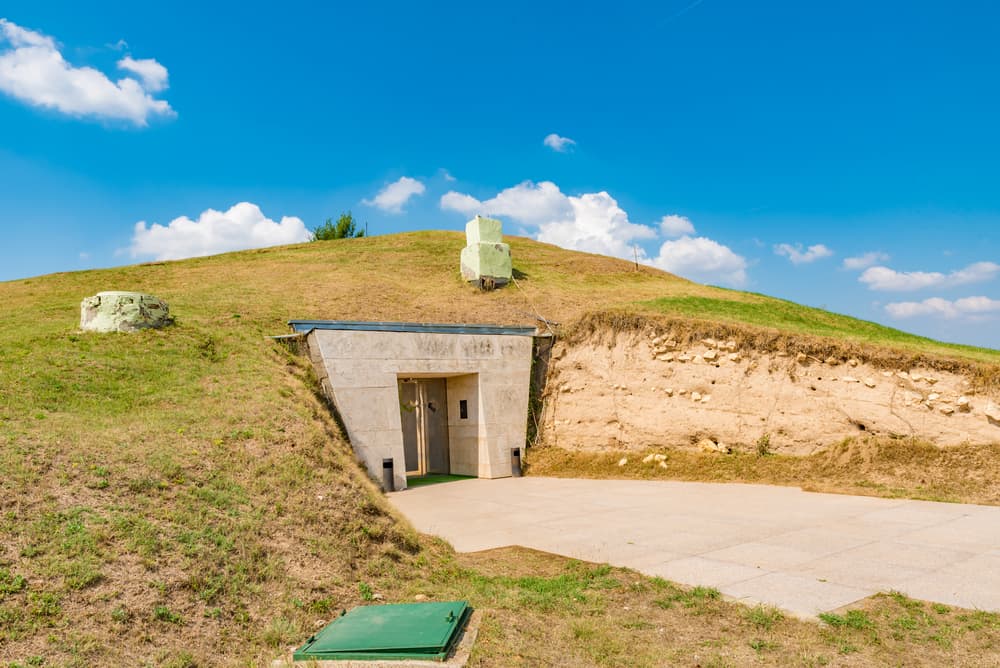
Thracian Tomb of Sveshtari
Thracian Tomb of Sveshtari
A UNESCO World Heritage site since 1985, the Thracian Tomb of Sveshtari houses sculpted caryatids and frescoes depicting royal apotheosis unique to 3rd-century BC Getian art, buried beneath a tumulus in the northeastern Bulgarian plain.
Buried beneath a tumulus in northeastern Bulgarie, the Thracian Tomb of Sveshtari stands as one of the best-preserved funeral monuments from ancient Thrace. Built in the 3rd century BC for a Getian king, it is distinguished by its sculptured caryatids in half-relief—unique in Thracian art. Listed as a UNESCO World Heritage site since 1985, it bears witness to a civilization often overlooked, contemporary with classical Greece.
Essential Information at a Glance
- Location: Sveshtari village, approximately 2 km from the center of Isperih municipality (Razgrad region).
- Admission: paid entry (combined tickets with the Isperih museum available).
- Recommended duration: 1 to 1.5 hours on site; longer if exploring neighboring tumuli in the Ginina Mogila necropolis.
- Dress code: no special requirements; comfortable walking shoes recommended (grassy terrain).
- Wheelchair accessibility: limited—the site sits in a natural setting with an unimproved path leading to the tomb entrance.
What to See
The tomb comprises three chambers carved from rock and lined with limestone blocks. The central chamber, the most spectacular, houses ten caryatids—female figures in half-relief supporting the vault—and a painted frieze depicting a scene of royal apotheosis. The partially preserved original colors offer a striking glimpse into Thracian decorative wealth.
The main burial chamber contained the remains of a man and a woman, likely a Getian king and his consort, accompanied by abundant funerary goods now displayed in the Razgrad regional museum.
History and Context
The Getae, the northern branch of the Thracians, controlled this region in the 4th–3rd centuries BC. The tomb is part of the Ginina Mogila royal necropolis, a complex of over one hundred tumuli scattered across the plain. Its discovery in 1982 revealed an unprecedented iconographic program: the caryatids blend Greek influences with local traditions, illustrating the intense cultural exchanges between the Thracian and Hellenistic worlds.
The UNESCO inscription in 1985—just three years after discovery—underscores the site's exceptional importance for understanding Thracian art and religion.
Highlights of Your Visit
The Caryatids of the Central Chamber
Ten limestone female figures, roughly one meter in height, appear to support the vault with their raised arms. Their style blends Greek drapery with local expressiveness. No other known Thracian tomb features sculptural decoration on such a monumental scale.
The Apotheosis Frieze
Above the caryatids, a painted frieze shows an equestrian deity welcoming the deceased. The pigments—ochre, red, black—remain visible in places, which is rare for a monument of this age.
The Tumulus and Surrounding Landscape
The tomb lies beneath a grass-covered tumulus visible from afar across the plain. The Ginina Mogila necropolis, with its dozens of mounds, forms an archaeological landscape unto itself, inviting walks among the tumuli.
Photography Tips
The tomb interior is dimly lit; a camera capable of high ISO sensitivity is useful. Photography is generally permitted without flash to preserve the pigments. Outdoors, late-afternoon raking light highlights the tumulus relief against the plain.
Location and Access
The site lies approximately 2 km northwest of Sveshtari village, itself some fifteen kilometers southwest of Isperih. Isperih is accessible from Razgrad (roughly 35 km) or Shumen. By car is most convenient; public transport serves Isperih but connections to the site are limited. A taxi from Isperih is an option.
The Razgrad regional museum preserves much of the funerary goods from the excavations and usefully complements a site visit.
Nearby Attractions
- Razgrad Regional Museum — displays Thracian funerary goods and regional history, approximately 35 km away.
- Madara Horseman — UNESCO-listed Thracian rock relief, roughly 60 km west, near Shumen.
- Shumen Fortress — medieval Bulgarian ruins overlooking the city of Shumen, approximately 65 km away.
Interested in this visit?
We can include it in your personalised itinerary.