Ksar Aït Benhaddou
Ksar Aït Benhaddou
A UNESCO-listed fortified village built in rammed earth, Aït Benhaddou overlooks the Ounila valley 30 km from Ouarzazate and serves as a set for international cinema.
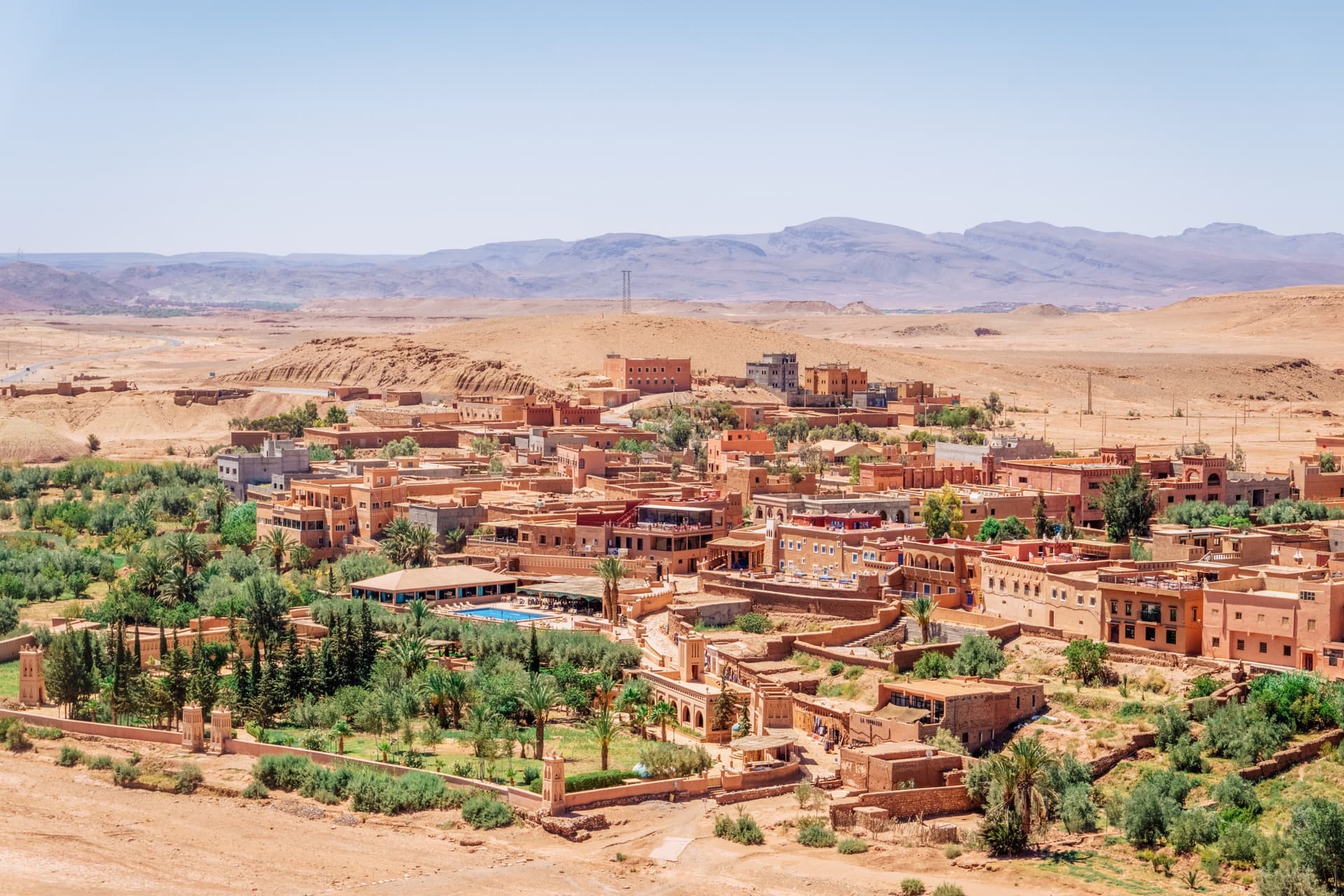
The ksar of Aït Benhaddou rises on a hillside in the Ounila valley, 30 km north of Ouarzazate and 190 km from Marrakech. Listed as a UNESCO World Heritage site since 1987, this fortified earthen village ranks among the best-preserved examples of raw earth architecture in southern Maroc. Inhabited for centuries, it regularly doubles as a set for international film productions, from Lawrence of Arabia to Game of Thrones.
Why visit the ksar of Aït Benhaddou
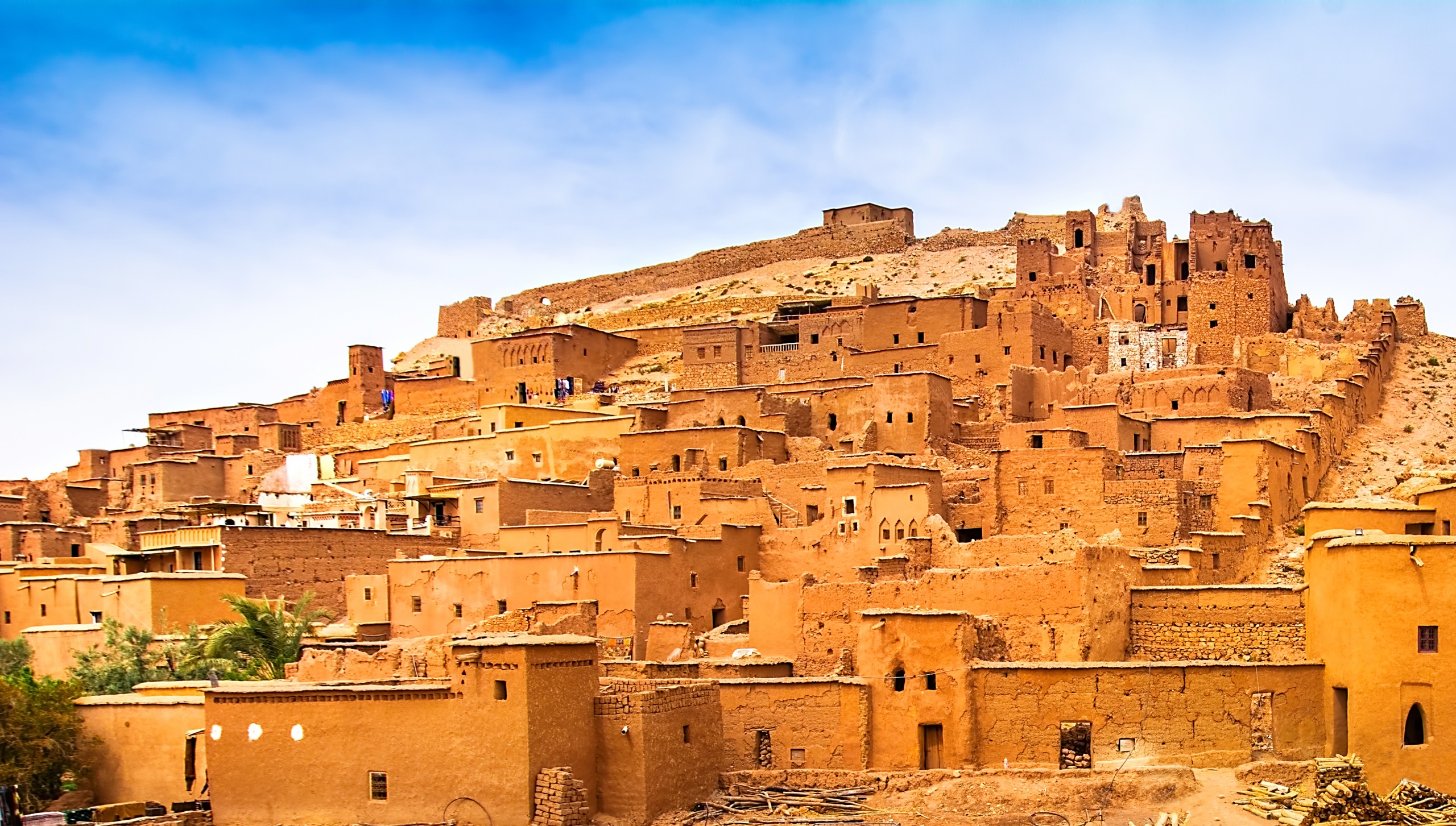
Spanning barely 0.03 km², the ksar concentrates a dense heritage: noblemen's houses, a Jewish quarter, mosque, Quranic school, communal granary, sanctuary, and remains of a caravanserai. The rammed-earth façades, corner towers, and raw brick patterns form a coherent architectural ensemble inherited from a type of pre-Saharan dwelling. During the French protectorate, it was nicknamed "the Mont-Saint-Michel of the Chleuhs."
The site's other appeal lies in its role in the history of trade routes: Aït Benhaddou was a stop on the caravan trail between Marrakech and the Sahara, through which gold, silver, and spices were transported.
History of the ksar
The founding of the village is attributed to Ben Haddou, who is said to have established a tribe on the site as early as 757; local tradition holds that he is buried beneath the city, though this claim belongs more to legend than documented history. Most of the buildings visible today date from the 17th century, when the ksar gained importance as a commercial stop and stronghold in the region.
The caravanserai, mosque, and communal granary testify to this function as a way station: merchants, sometimes traveling for months, found shelter, water, and storage there. The gradual settlement of Berber families, formerly nomadic, fixed the population around the site. UNESCO World Heritage designation in 1987 led to a conservation program for the earthen buildings, which are particularly vulnerable to erosion.
What to see on site
Architecture and quarters
Three gates provide access to the ksar. Inside, narrow streets climb toward the citadel that crowns the hilltop. You pass successively through the houses of ruling families, the Jewish quarter, more modest dwellings, the mosque, and a small Quranic school. Outside the walls lie the grain-threshing areas and two cemeteries, one Muslim and one Jewish. The sanctuary of Sidi Ali completes the ensemble.
Communal granary and caravanserai
The granary, perched at the top of the ksar, served to store harvests in preparation for drought years. The remains of the caravanserai, lower down, recall the village's function as a stopping point.
Cultural spaces
Two recent structures enhance the visit: the House of Orality, devoted to Berber narrative traditions, and the House of Cinema, which documents the many films shot on site.
Aït Benhaddou on film
The ksar is one of Maroc's most-filmed locations. Among the productions shot here:
- Lawrence of Arabia (1962)
- Sodom and Gomorrah (1963)
- Jesus of Nazareth (1977)
- The Jewel of the Nile (1985)
- James Bond: Live and Let Die (1987)
- The Last Temptation of Christ (1988)
- The Mummy (1999)
- Gladiator (2000)
- Alexander (2004)
- Kingdom of Heaven (2005)
- Babel (2006)
- Prince of Persia (2010)
- Game of Thrones (2011)
- Queen of the Desert (2015)
Around the ksar
The Asif Ounila wadi, also called Oued Maleh, runs alongside the site. Laden with salt, its water is unfit for consumption and leaves whitish deposits visible in the dry season. Local wildlife includes freshwater turtles, agamas, squirrels, fennec foxes, praying mantises, tree frogs, and chameleons, often hidden among the olive trees. The surrounding area is also known for its minerals (quartz, amethyst, desert roses) and fossils, notably trilobites, sold in the village shops.
Practical information
Access to the site is free. Plan 2 to 3 hours for a complete visit, longer if you wish to climb to the citadel and browse the craft shops. Good walking shoes are useful: the streets are steep and uneven. Bring water and sun protection; shade is rare once you reach the heights.
When to visit
The climate is arid to semi-arid, marked by hot, dry summers and cool winters. The annual average hovers around 19.5 °C; July regularly exceeds 30 °C during the day while January drops to around 9 °C. The best times to visit are April to June and September to October, when temperatures remain comfortable and the light enhances the rammed-earth façades.
How to get there
From Marrakech
CTM and Supratours operate daily services to Ouarzazate, with a journey time of around 4 hours via the Tichka Pass. Ghazala and several local lines offer more economical fares. Once in Ouarzazate, it remains to reach the ksar, located about thirty kilometers to the north.
From Ouarzazate
Shared taxis (grands taxis) depart from Tabount station toward Aït Benhaddou at a modest fare. You can also hire a private taxi. Hitchhiking works on this route: tell the driver you're getting out at Tabourahte, the hamlet nearest the ksar.
Nearby attractions
The site lends itself well to an itinerary through southern Maroc. About thirty kilometers away, Ouarzazate is home to the Taourirt kasbah and film studios. Further east, the road leads to the Dadès Gorges and then the Todgha Gorges, classic stops before descending to the desert. To the north, the Ounila valley climbs toward Télouet, former stronghold of the Glaoui, and connects to Jemaa el-Fna square in Marrakech via the Tichka Pass.
Frequently asked questions
Frequently asked questions
Access to the ksar is free. Some private houses open to the public may request a small contribution, and a local guide can be hired on site to enhance your visit.
Plan 2 to 3 hours to walk the streets, climb to the citadel, and descend. If you combine the visit with lunch or a stop at the House of Cinema, allow half a day.
It's possible but long: the round-trip journey exceeds 8 hours of driving due to the Tichka Pass. It's better to plan a night in Ouarzazate or in a riad facing the ksar to enjoy the site in the late afternoon and at sunrise.
April to June and September to October. Summer is very hot and offers little shade in the ksar; winter remains feasible but nights are cool.
Yes, a few families still live inside the walls, but most residents have relocated to the new village on the other side of the wadi.
Plan your trip
Aït Benhaddou fits naturally into an itinerary crossing southern Maroc, between the Atlas, pre-Saharan valleys, and the gates of the desert. To build a tailored itinerary, consult our trips to Maroc.
Interested in this visit?
We can include it in your personalised itinerary.