Todgha Gorges
Todgha Gorges
Spectacular canyon carved into the foothills of the High Atlas near Tinghir: 300 m walls, palm grove, Berber villages and renowned climbing site.
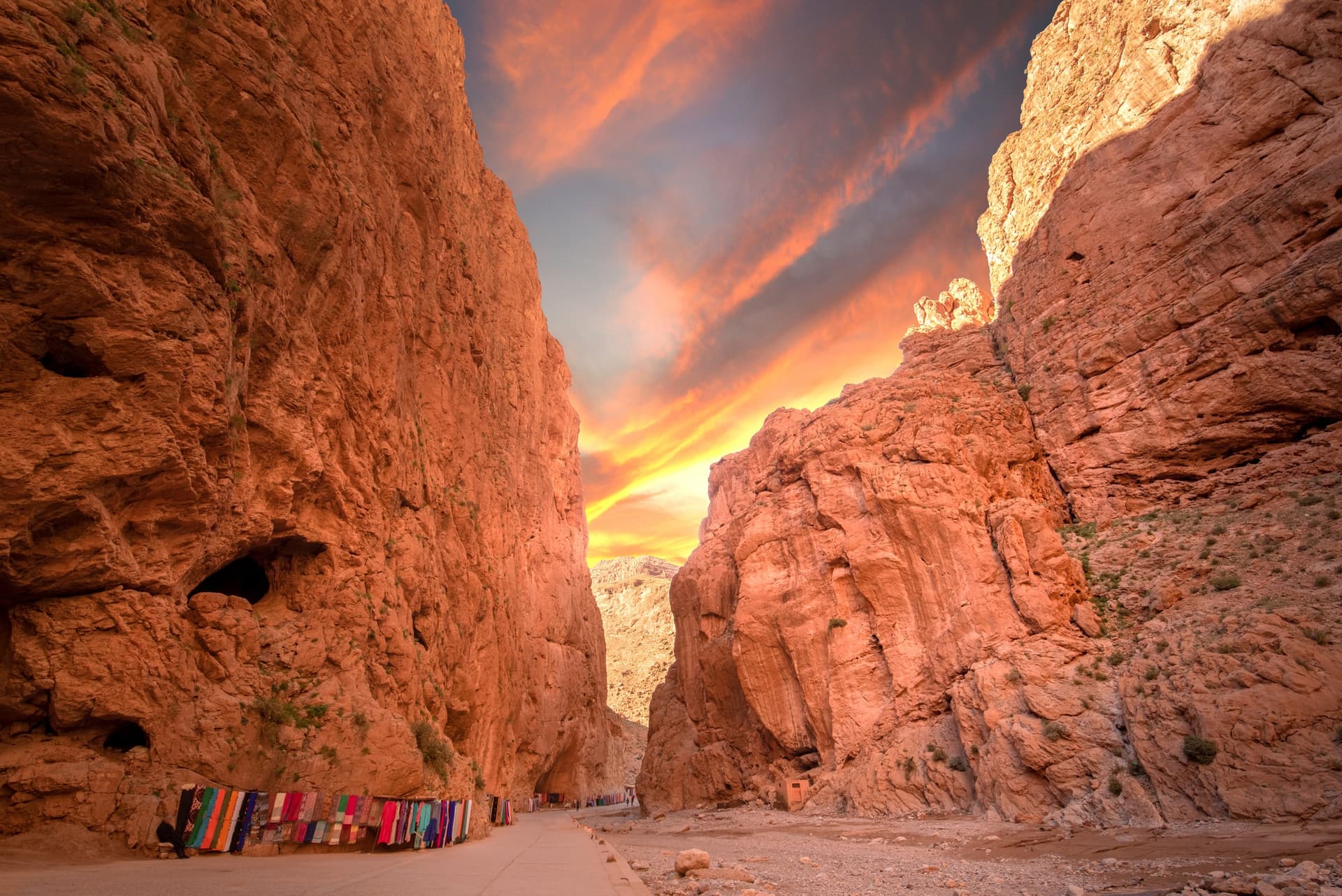
The Todgha Gorges form a spectacular canyon carved by the river of the same name into the eastern foothills of the High Atlas, about fifteen kilometres north of Tinghir. Stretching nearly 20 km long and up to 2 km wide, limestone walls rise more than 300 metres above the river bed, creating a mineral corridor with ochre and red tones. The site combines geological landscapes, palm groves, Berber villages and a recognized climbing destination.
Why visit the Todgha Gorges
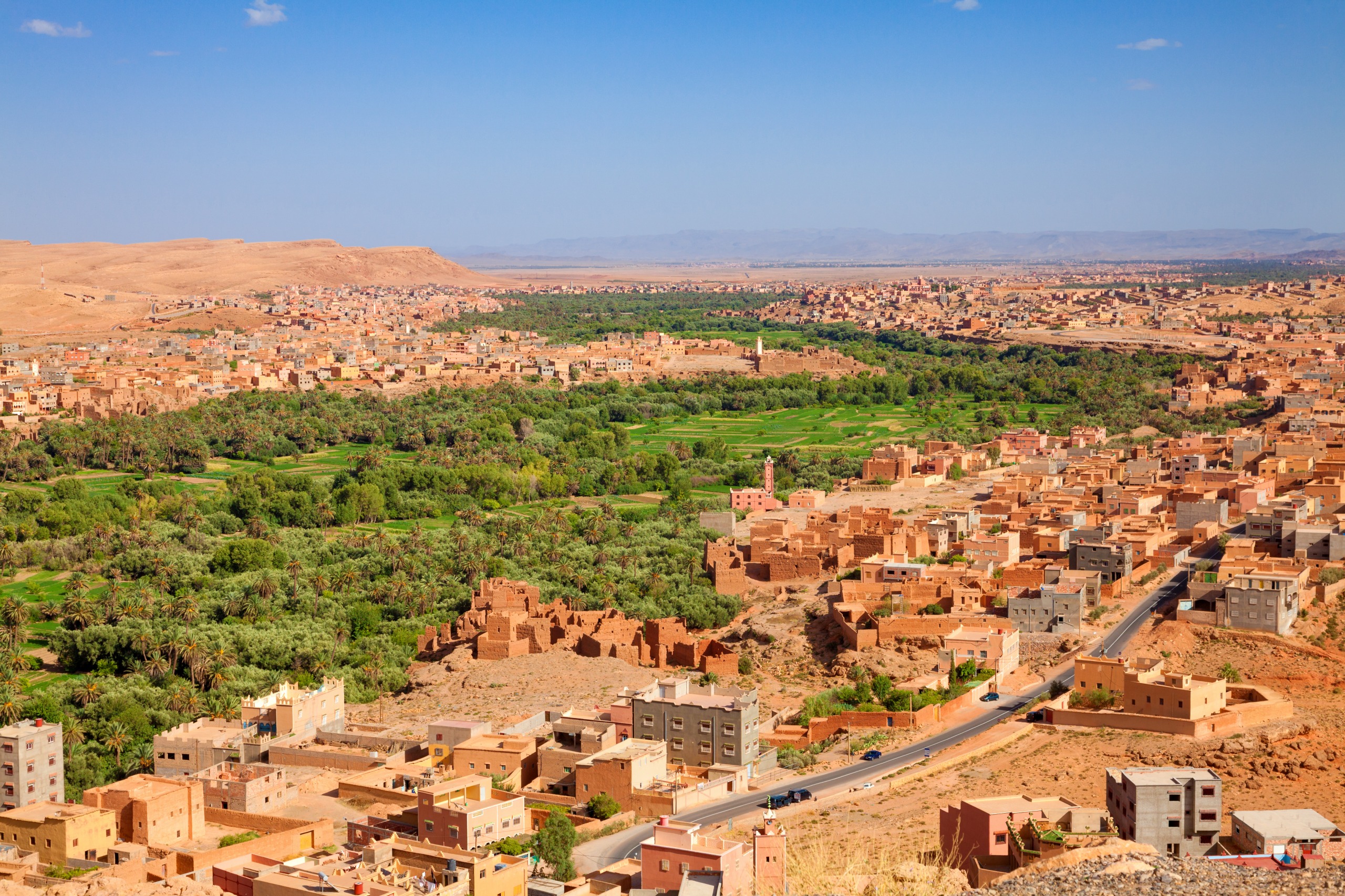
The gorges are among the most striking natural sites in southeastern Morocco. They offer a stark contrast between the aridity of the surrounding plateaus and the cool depths of the canyon, where the river feeds a long palm grove. The territory is historically that of Berber nomads who ascend here to spend the summer in the cool after wintering at the edges of the desert. The Todgha valley, dotted with kasbahs and mud-brick ksars, retains much of its vernacular architecture.
Several local legends accompany a journey through the site: a spring at the bottom of the gorges is said to cure infertility in women, and a goat that escaped sacrifice is rumoured to wander the canyon still. These tales, passed down by locals, form part of the region's oral heritage.
What to see and do
The canyon and the river
The narrowest passage, where the road hugs the wall for a few hundred metres, is the most photographed spot. The Todgha River flows along the canyon floor: fishing is forbidden, but the water is freely available for use by locals and travellers alike. The palm grove stretching along the river allows for a shaded walk at the gorges' exit, heading towards Tinghir.
Climbing and rock climbing
The Todgha walls are renowned among climbers. Several routes are equipped and marked, particularly in the most enclosed section, while other areas remain uncharted. Climbing equipment can be rented in nearby villages, and local guides offer instruction on the more technical routes.
Villages and Berber culture
Along the road extending the gorges northward, the villages of Tamtatouttche and Aït Hani offer opportunities for a stop or an overnight stay in a guesthouse. The journey provides real insight into Berber life, with terraced farming, livestock raising and traditional dwellings.
Practical information
- Visit duration: allow 2 to 3 hours to drive through the gorges with photo stops, or a half day to a full day if you combine walking, climbing or exploring the palm grove.
- Site access: free, no entrance fee.
- Equipment: closed-toe shoes, water, sun protection; technical gear for climbing.
- Safety: the river can experience rapid flooding in case of storms upstream. Check the weather before any walk in the gorge and avoid lingering if conditions are uncertain.
- Accommodation: guesthouses in villages throughout the valley and in Tinghir.
When to visit
Spring (March to May) and autumn (September to early November) offer the most comfortable conditions, with moderate temperatures and favourable light in the canyon. Summer remains accessible as the gorge floor stays cool, but the surrounding plateaus are very hot and the risk of storms increases. Winter is harsher at night and some high-altitude passages to the north may be snow-covered.
How to get there
The gorges are reached from Tinghir, about 15 km to the north via an asphalt road that follows the palm grove then ascends the canyon. Beyond the canyon, the track leading to Tamtatouttche and Aït Hani is passable by 4x4 and motorbike, with some challenging sections depending on the season. Tinghir is accessible from Ouarzazate (approximately 170 km) or Errachidia, on the route connecting the Dadès valley to the Tafilalet.
Nearby attractions
- The town of Tinghir and its palm grove, the logical starting point for your visit.
- The Attiq waterfalls, another natural site in southern Morocco.
- The Ben Youssef medersa and the Bahia Palace in Marrakech, common stops before or after a circuit through the south.
Frequently asked questions
Planning your trip
The Todgha Gorges fit naturally into an itinerary combining the Dadès valley, Tinghir and the Merzouga desert. To build this bespoke journey, explore our Morocco trips.
Interested in this visit?
We can include it in your personalised itinerary.