Plovdiv and the Valley of Roses
Seven hills, an active Roman theatre, an old town from Bulgaria's National Revival period, and 60 km north, fields of damascena roses harvested at dawn in May and June.
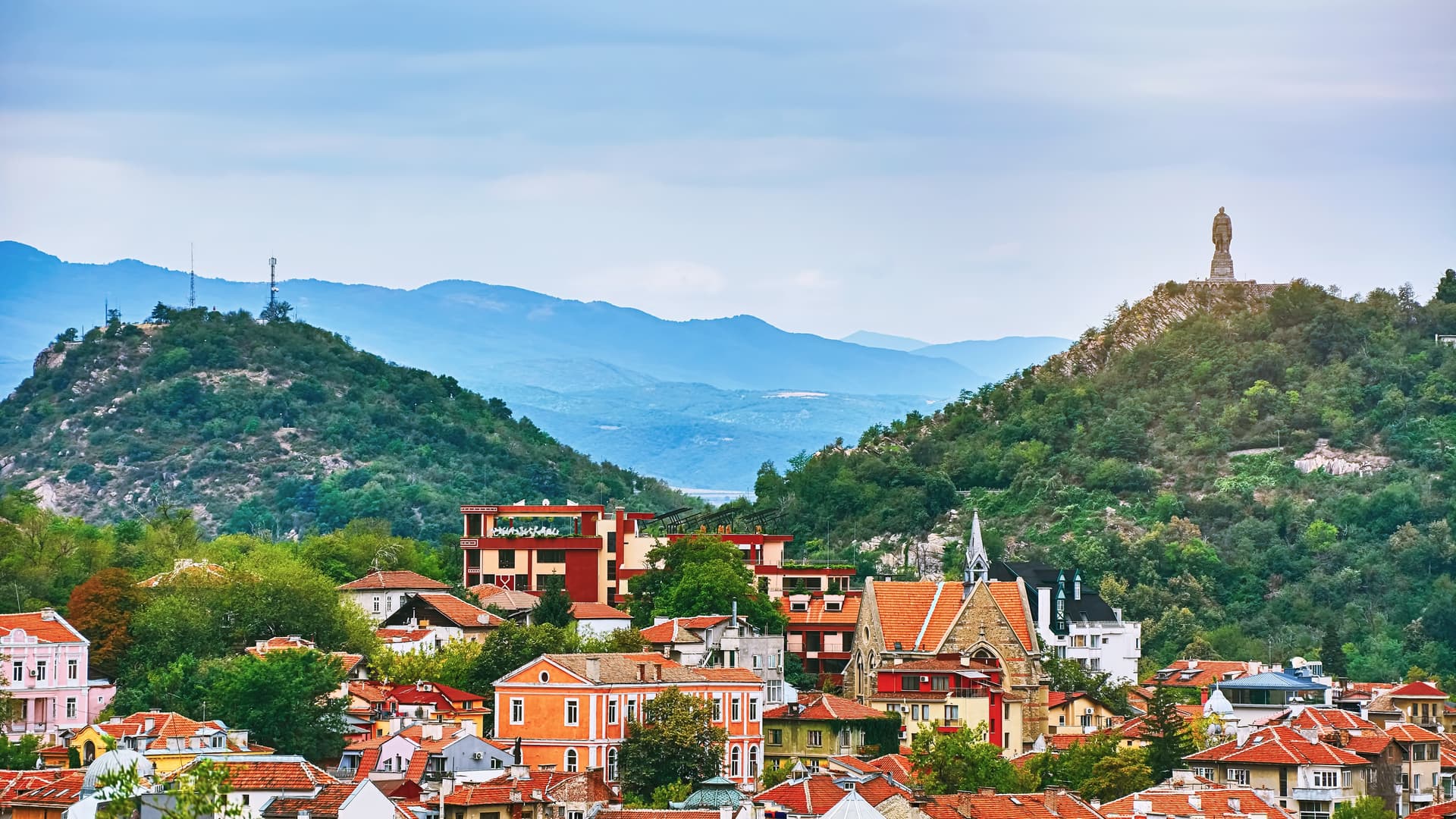
Plovdiv sprawls across seven syenite hills in the heart of the Thracian plain, 150 kilometres south-east of Sofia via the Trakia motorway. Our team regards this city as one of Europe's oldest continuously inhabited urban centres: excavations at Nebet Tepe have uncovered Thracian settlements from the 6th millennium BCE, and the Roman theatre of Philippopolis, carved into the slope between Dzhambaz and Taksim hills, still hosts concerts and performances by the national opera from June to September.
The old town, Stari Grad, climbs on uneven cobbles between half-timbered houses built between 1820 and 1870, at the height of Bulgaria's National Revival. The painted façades of the Balabanov house, the Kuyumdzhioglu house—which houses the ethnographic museum—and the Hindliyan house bear witness to the wealth of Greek, Armenian and Bulgarian merchants who controlled the tobacco and silk trade at the time. Below, the Kapana quarter, a former artisanal district revitalised in the 2010s, concentrates some fifty bars, galleries and restaurants along a few pedestrian streets. This is generally where our guests dine: a shopska salad, a kavarma stew and a glass of mavrud, the local red varietal from the Asenovgrad region, comes to around 15 or 18 euros per person.
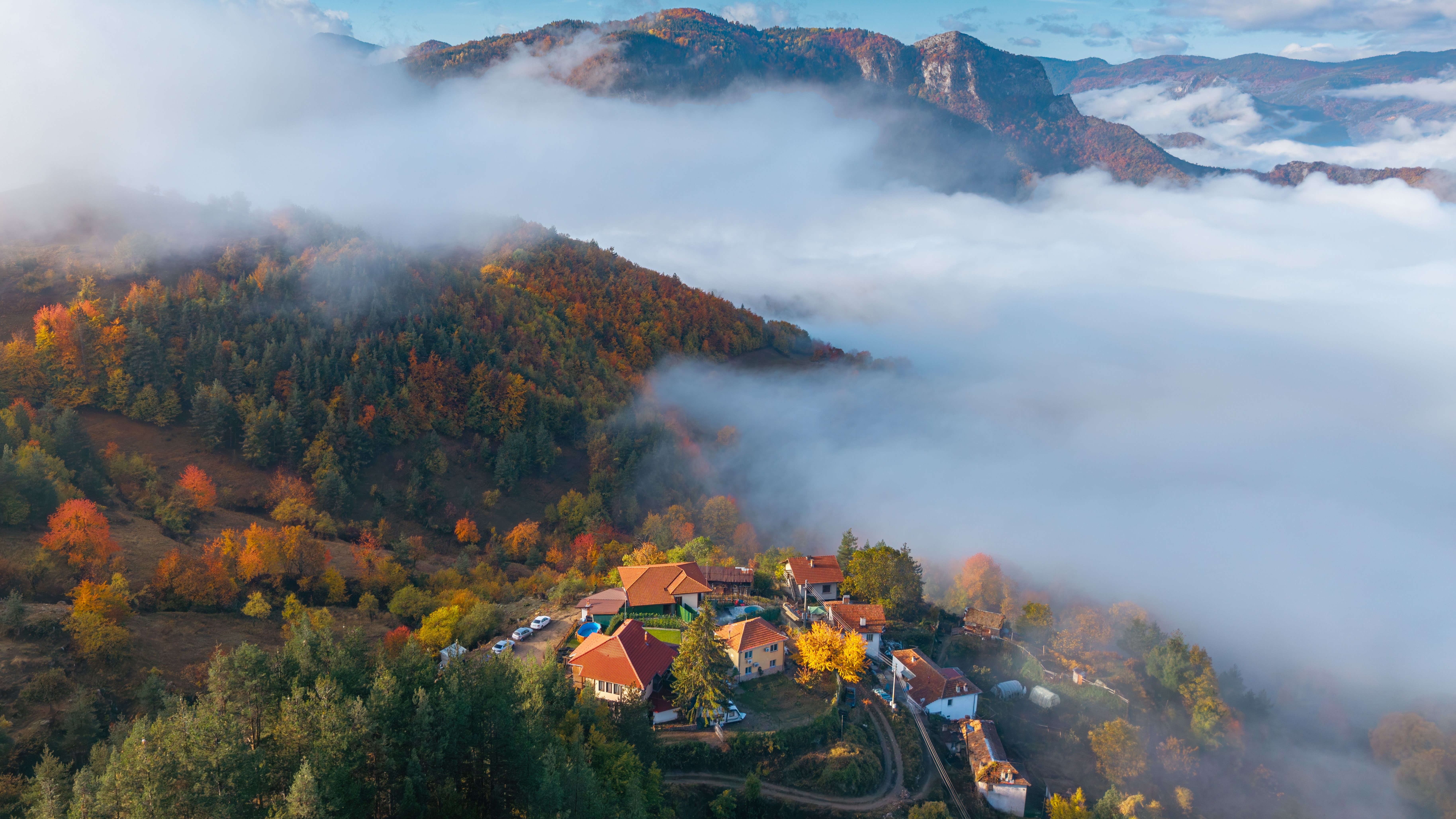
Sixty kilometres north of Plovdiv, the Sredna Gora chain pulls away from the Stara Planina to form a long east-west furrow: this is the Valley of Roses, stretching nearly 100 kilometres between Klisura, Karlovo, Kalofer and Kazanlak. The sheltered climate, sandy soils and morning moisture descending from the Balkans have enabled the cultivation of damascena roses since the 17th century. Picking is done by hand, between 5 and 9 in the morning, for three to five weeks depending on the year, generally from 20 May to 15 June. One tonne of petals produces around one kilo of essential oil, which explains its price per gramme. We take our guests to family distilleries around Rozino and Tarnichene, where copper stills are still heated over wood fires during the season.
Kazanlak, the valley's informal capital, also home to one of the best-preserved Thracian necropolises in the Balkans. The 4th-century BCE painted tomb, a UNESCO World Heritage site since 1979, is visible only through its faithful neighbouring replica, the original being closed for conservation. Several other tumuli in the valley—Goliama Kosmatka, Ostrusha, Shushmanets—have yielded treasures now housed in the Iskra museum. The region was the heart of the Odrysian kingdom, and the density of princely tombs earned it the nickname Valley of the Thracian Kings.
The climate is decidedly continental. Summers are hot and dry, with peaks of 32 or 35 degrees in July and August in Plovdiv, somewhat cooler at higher elevations in the valley. Winters regularly dip below freezing between December and February, with possible snow and temperatures of minus 5 to minus 10 degrees on certain nights. Spring, April to June, and early autumn, mid-September to mid-October, remain our preferred seasons for this region.
To discover
Roman theatre of Plovdiv in performance. Attend a concert or opera in summer in the marble tiers of the 2nd century, with the Thracian plain as backdrop behind the restored colonnade.
Rose picking at dawn near Kazanlak. Join the pickers in the fields of Rozino between late May and mid-June, when dew still carries aromatic essences, then follow the distillation in the copper still during the morning.
Thracian tomb at Kazanlak and neighbouring tumuli. Descend into the replica of the 4th-century BCE painted tomb, then explore the burial chambers of Goliama Kosmatka where the gold mask of King Seuthès III was found.
Evening in the Kapana quarter. Dine in a former artisan's shop converted into a restaurant, around a cataplana of chicken with plums or roasted red peppers stuffed with sheep's cheese, accompanied by a mavrud from Asenovgrad.
Bachkovo Monastery on the edge of the Rhodopes. Thirty kilometres south of Plovdiv, this monastery founded in 1083 preserves 17th-century frescoes in its ossuary, on the route towards the Rhodope massif.
When to visit
We recommend two main windows. Late April to mid-June for the Valley of Roses: daytime temperatures of 18 to 25 degrees, maximum flowering between 20 May and 10 June, rose festival in Kazanlak the first weekend of June. Mid-September to mid-October for Plovdiv: 20 to 26 degrees, mavrud grape harvest around Asenovgrad, golden light on the Stari Grad façades and tourism numbers dropping sharply after 15 September.
July and August remain feasible but hot, 30 to 35 degrees in Plovdiv during the day, with pronounced crowds in the old town. The Valley of Roses, at an average elevation of 380 metres, remains more bearable. In winter, December to February, most distilleries close and many Plovdiv museum houses operate on reduced schedules; snow can complicate the Shipka Pass linking the valley to Veliko Tarnovo, with night temperatures of minus 5 to minus 10 degrees.
Practical advice
We recommend a minimum of 3 days in this region: 2 nights in Plovdiv for the Roman theatre, Stari Grad, the archaeological museum and an evening in Kapana, then 1 night in the Valley of Roses, in Kazanlak or a guesthouse near Karlovo, to combine rose distillery and Thracian tombs. With 5 days, add Bachkovo Monastery, Asen Fortress and a day exploring the foothills of the Rhodopes.
The logical entry point is Sofia airport, 1 hour 45 minutes by road from Plovdiv via the A1 motorway. The region connects well with Sofia and Rila to the west, Veliko Tarnovo and central Balkans to the north via the Shipka Pass (1 hour 30 minutes from Kazanlak), and the Rhodopes to the south via the Smolyan road. Comfort levels are high: boutique hotels in National Revival houses, contemporary Bulgarian cuisine restaurants in Plovdiv, family guesthouses in the valley. This region particularly suits travellers drawn to deep history, Thracian-Roman archaeology and agricultural heritage. It lends itself less to a purely nature-based stay.