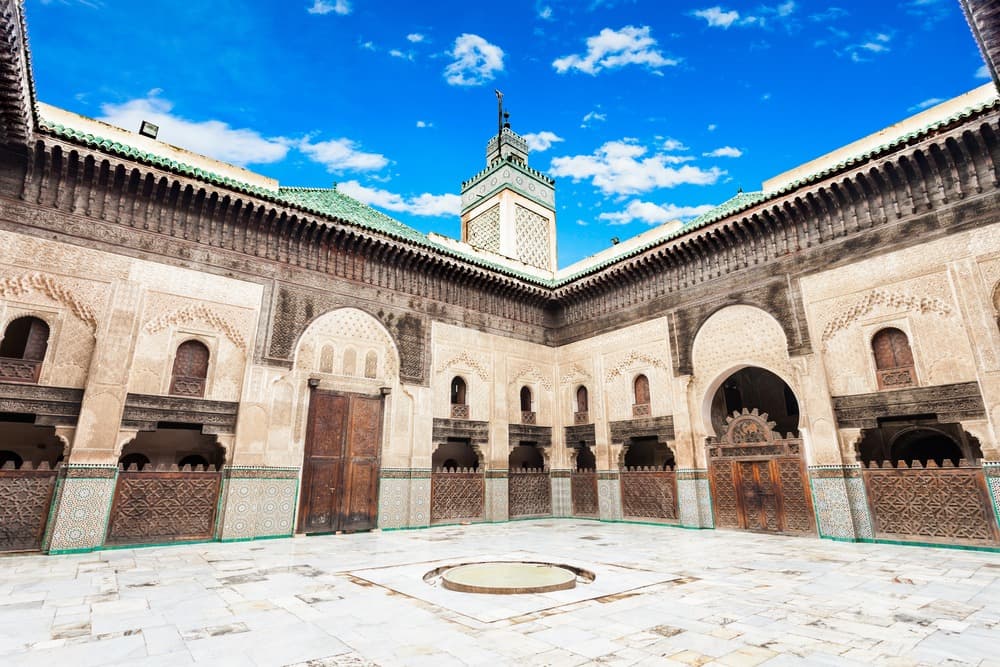
Medersa of Bou Inania
Medersa of Bou Inania
A Quranic school founded in the 14th century under the Marinid dynasty, the Medersa of Bou Inania brings together cedar architecture, ornate plasterwork, and an enigmatic hydraulic clock in the heart of Fès.
The Medersa of Bou Inania is one of the most accomplished Quranic schools of the Marinid dynasty. Located in the medina of Fès, just steps from the Bab Boujloud gate, it reflects the city's role as an intellectual and religious center of Morocco, sometimes called the "Athens of Africa." It is also the only madrasa in Fès equipped with a minaret, which allowed it to serve simultaneously as an educational center and a mosque.
Why visit the Medersa of Bou Inania
Three main reasons make this monument worth a visit for travelers passing through Fès:
- Complete Marinid architecture: sculptured cedar ceilings and beams, marble flooring, hand-carved stucco and Arabic calligraphy adorn the entire building.
- An active religious function: the ablution fountain still operates, fed by the Fès river, and an imam regularly leads prayers here.
- An enigmatic hydraulic clock just across the way, whose mechanism has never been fully reconstructed by scholars.
History of the madrasa
The madrasa was founded by the Marinid sultan Abou Inan between 1351 and 1358. This sovereign's reign is marked by its violence: he allegedly killed his father to seize the throne, massacred his political rivals, and left more than 300 descendants. According to tradition, religious leaders of the Karaouiyne Mosque recommended he build this Quranic school to atone for his sins.
The institution operated independently for several centuries, until education gradually became centralized within the Karaouiyne University. Damaged by an earthquake, the madrasa was restored in the 17th century under Sultan Mulay Sliman, and its decorations were renewed in the 20th century.
What to see on site
The central courtyard and its decorations
The emblematic element of the madrasa is its tower with green-glazed tiles, visible from the street. Once inside, attention turns to the central courtyard: marble flooring, ablution fountain, and galleries covered with chiseled stucco combining geometric motifs, botanical designs, and calligraphic inscriptions. The sculptured cedar ceilings and beams bear witness to the skill of Marinid artisans.
The student quarters
On the upper floor, the former residential cells of theology students are open to the public. From the windows, you can see the courtyard below. The rooms, austere and narrow, contrast with the decorative richness of the ground floor.
The prayer hall
The madrasa retains its religious function. The mihrab and prayer hall remain reserved for worshippers, but non-Muslim visitors may observe the rest of the complex. Two entrances provide access to the site: one on Talaa Kebira street (the central thoroughfare, aligned with the mihrab), the other on Talaa Seghira street, at the rear.
The hydraulic clock
Just opposite the main entrance stands a wall-mounted hydraulic clock that continues to intrigue specialists. Inspired by ancient water clocks, it consists of 13 containers and 13 openings, the last vessel collecting water at the end of each cycle. The volume of water used varied with the seasons. The exact mechanism, lost over the centuries, has never been fully reconstructed despite several restoration attempts.
Practical information
- Duration of visit: allow 30 to 45 minutes to explore the site.
- Admission: paid entry at a moderate rate (differential pricing for foreign and Moroccan visitors).
- Dress code: shoulders and legs covered recommended, as the site remains an active religious building.
- Photography: permitted in the courtyard, best avoided during prayer times.
When to visit
The madrasa is open for visits Saturday through Thursday. On Friday, the holy day in Islam, the site closes to tourists. Access is also suspended during the five daily prayers, which last about twenty minutes each; generally you simply wait outside.
During Ramadan, opening hours may be reduced and the atmosphere more contemplative. For light, mid-morning and late afternoon best showcase the stucco and woodwork of the courtyard.
How to get there
The madrasa is located in the medina of Fès, in the Fès el-Bali quarter. From Bab Boujloud (the Blue Gate), it's about a 2-minute walk following Talaa Kebira street, the main thoroughfare that descends into the heart of the medina.
Taxis drop off near Bab Boujloud, as the medina is closed to vehicle traffic. From the new town, count 15 to 20 minutes by petit taxi.
Nearby attractions
Your visit can fit into a half-day walking tour of the medina:
- The Karaouiyne Mosque and its renowned university, a 10-minute walk away.
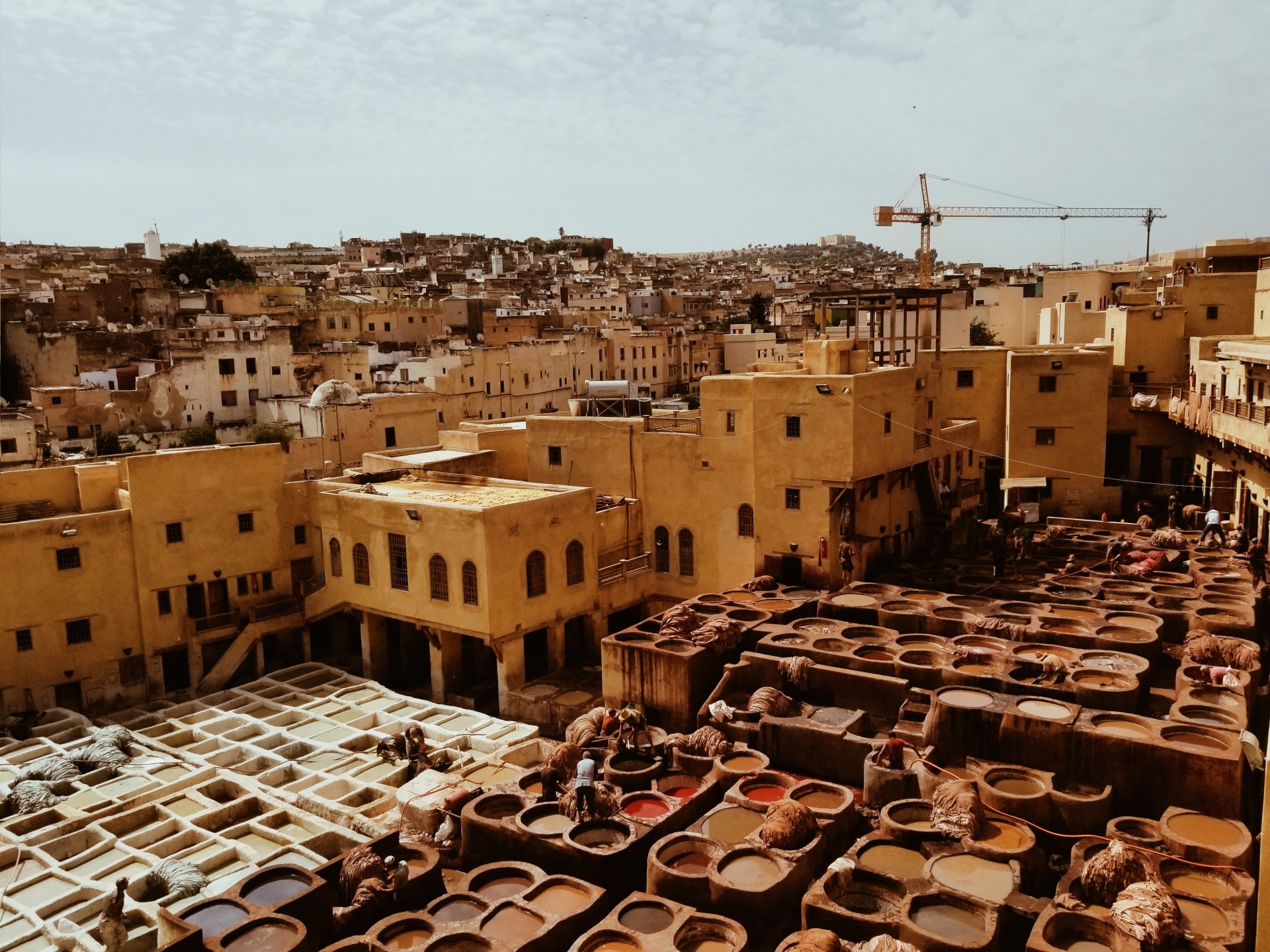
- The Chouara tanneries district, further east in the medina.
- To compare Marinid Quranic schools, the Medersa of Ben Youssef in Marrakech offers an interesting parallel.
- For palaces, the Bahia Palace showcases another facet of Moroccan architecture.
Frequently asked questions
Frequently asked questions
Yes, unlike many mosques in Morocco, the madrasa is open to non-Muslim visitors, except during prayer times and within the prayer hall itself.
Friday, the holy day for Muslims, the site does not accept tourist visits.
Between 30 and 45 minutes is sufficient to tour the courtyard, upper floors, and observe the hydraulic clock across the way.
No, the mechanism stopped long ago and has never been fully restored. Only the wooden structure with its 13 containers remains visible from the street.
It is not essential: you can visit freely. However, a local guide provides helpful insights into the calligraphy, decorative motifs, and Marinid history.
Include the madrasa in your trip
The Medersa of Bou Inania is a brief but rich stop that naturally combines with wider exploration of Fès and northern Morocco. To build a custom itinerary incorporating this visit, explore our Morocco travel ideas.
Interested in this visit?
We can include it in your personalised itinerary.