Sofia and Rila
From the capital Sofia at 550 metres to Rila Monastery nestled in its forested valley, an entry point that blends Roman ruins, Orthodox frescoes and the highest peaks of the Balkans.
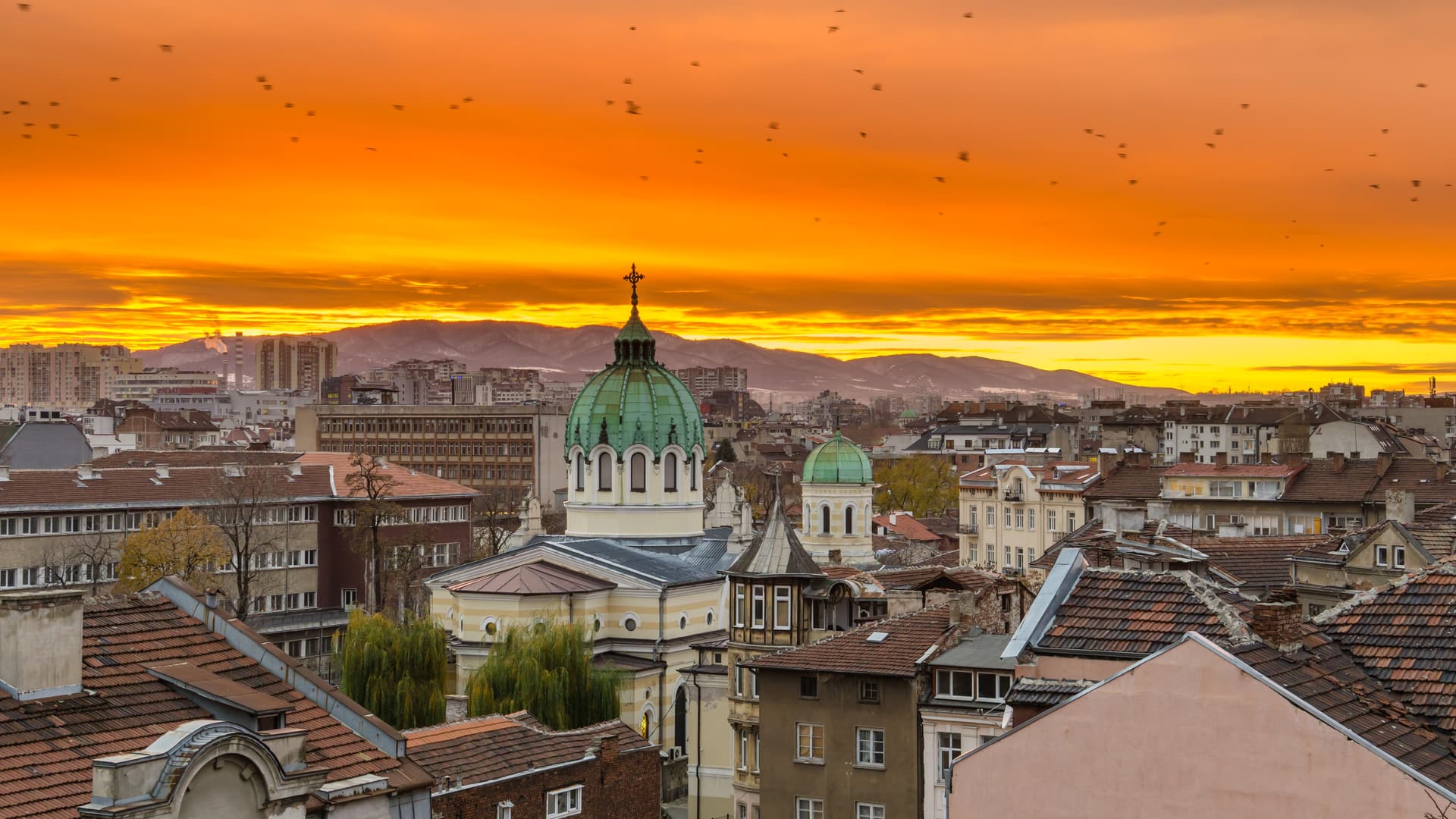
Sofia sits in a basin at 550 metres elevation, backed by the Vitocha massif which peaks at 2290 metres—a mountain locals ride by cable car on Sundays from the Simeonovo quarter. The capital holds 1.3 million inhabitants and bears traces of every historical layer: remains of Roman Serdica surface beneath Serdika metro station, the fourth-century rotunda of Saint George hides in the presidential courtyard, and the Alexander Nevsky Cathedral, completed in 1912, still dominates the centre with its golden cupolas. We love starting with Boulevard Vitocha at dusk, then heading toward Oborishte, the neighbourhood of embassies with Art Nouveau facades, to dine in a mehana serving chorba—tripe soup—or chushki byurek, white cheese-stuffed peppers.
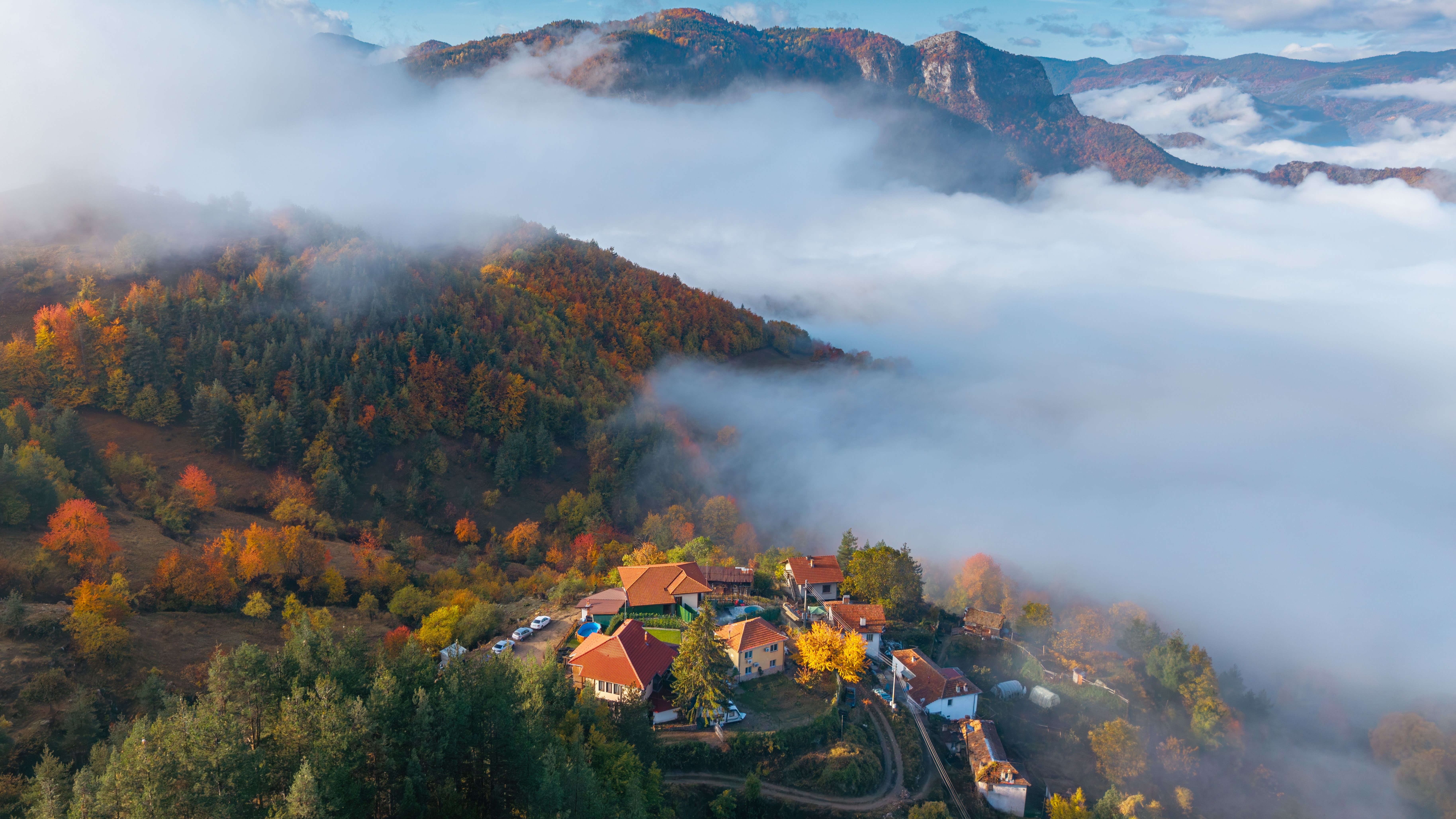
An hour and a half south by Struma motorway, the landscape shifts entirely. The Rila massif rises as one granite block, forested first with beech then Macedonian pines. It is the water tower of the Balkan peninsula: the Maritsa, Iskar and Mesta rivers originate here. Moussala, at 2925 metres, is the highest peak between the Alps and Caucasus. Our hiking guests ascend it from Borovets via cable car then on foot in five hours round trip, with the option of stopping at Everest refuge for a night at altitude.
Rila Monastery, founded in the tenth century by hermit Ivan Rilski and rebuilt after the 1833 fire, sits at 1150 metres in a closed valley. Its arcaded galleries painted with scenes of the Last Judgement surround the Church of the Nativity of the Virgin. The monastery remains active: about ten monks live there, and for those who wish, we arrange a night in the austere cells of the north wing, with dinner in the refectory and morning service at 6am. The access road from Rila town crosses 22 kilometres of state forest where brown bears and wolves still roam, though rarely seen.
Further northwest in the massif, the Seven Lakes of Rila form a staircase of glacial cirques between 2100 and 2535 metres. They are reached by chairlift from Panitchichté, then a four-hour loop allows you to see them all: the Tear, the Trefoil, the Twin, the Kidney and others. The Paneurhythmy Brotherhood, a spiritual movement founded by Peter Deunov, gathers there each 19th August to dance in circles at sunrise—a strange and peaceful spectacle we recommend for those passing on that date.
On the table, the Sofia region blends lowland traditions with mountain produce. The capital's covered markets, notably Jenski Pazar, sell Rila sheep's yoghurt, katchkaval cheeses aged at altitude, and apples from the Kustendil orchards slightly further west. Local wine comes mainly from the Struma valley: Melnik 55 and Damianitza Cabernet pair well with grilled meats. In winter, hot plum rakia is drunk in the chalets of Bistritsa at the foot of Vitocha, after a day of skiing on the slopes of Aleko.
This combination of capital plus sacred high mountain makes Sofia and Rila the logical gateway to the country. Contrasts are sharp within two hours' drive: Soviet trams and Byzantine frescoes, business skyscrapers and transhumant shepherds. It is also the region where modern Bulgarian was codified, around the Academy of Sciences founded in Sofia in 1869, and where the memory of communism remains readable in the monumental architecture of Largo and the Museum of Socialist Art, which gathers in its park the statues of Lenin and Dimitrov toppled in 1989.
To discover
Rila Monastery and night in a cell. Nineteenth-century painted galleries in a valley at 1150 metres, with the option to sleep in a monastic cell with morning service at 6am.
Hiking the Seven Lakes of Rila. A four-hour loop between 2100 and 2535 metres, from the Panitchichté chairlift, through glacial cirques and edelweiss meadows.
Roman Serdica beneath Sofia's metro. Fourth-century ruins uncovered during the construction of line 2, freely visible under Serdika station, next to the Saint George rotunda.
Climbing Moussala. The highest peak of the Balkans at 2925 metres, accessible in a day from Borovets via cable car then five hours' walk.
Paneurhythmy gathering on 19th August. Circle dancing at sunrise on the shores of Lake Babreka, inherited from spiritual master Peter Deunov, a rare testimony to Bulgarian spirituality beyond Orthodoxy.
When to go
The best period to combine Sofia and Rila runs from mid-May to mid-October. June and September are our preferred months: temperatures of 20 to 25°C in the capital, mountain trails clear of snow, crowds still moderate at the monastery. July and August reach 28-32°C in Sofia, sometimes humid, but remain pleasant at altitude where it is 10 to 15°C cooler. The Seven Lakes are fully accessible on foot only from mid-June onwards, snow lingering late in the north-facing cirques.
From December to March, Sofia hovers around 0 to 5°C with episodes dropping below minus 10, and Vitocha like Borovets function as ski resorts between December and April. Rila Monastery stays open year-round but the road may be icy, and some high-altitude hikes become inaccessible without snowshoes or crampons. November and April are months to avoid: frequent rain, valley fog, mountain refuges closed for maintenance.
Practical advice
Allow a minimum of three days for Sofia and Rila: a full day in the capital, a monastery day and overnight stay, a hiking day at the Seven Lakes or Moussala. Five days allow you to add Vitocha and a trip to Koprivshtitsa, a museum village 110 kilometres east. Sofia airport is served by most European airlines and is 20 minutes from the centre by metro line 1.
The region logically combines with Plovdiv and the Valley of Roses, 1h30 east by motorway, to extend toward the old Ottoman town and the distilleries of Kazanlak. For a longer circuit, we then continue to Veliko Tarnovo and the central Balkan, then the Rhodopes to the south. Comfort levels in Sofia are those of a standard European capital, with 4 and 5-star hotels and varied dining. At the monastery and in mountain refuges, accommodation is simple, clean, heated. This region suits contemplatives seeking religious art as much as hikers looking for accessible mountains without technical difficulty.