Veliko Tarnovo and Central Balkan
Ancient capital of the Second Bulgarian Empire, Veliko Tarnovo opens onto Arbanassi, Tryavna and the Central Balkan passes, cool mountains and villages of stone and wood craftsmen.
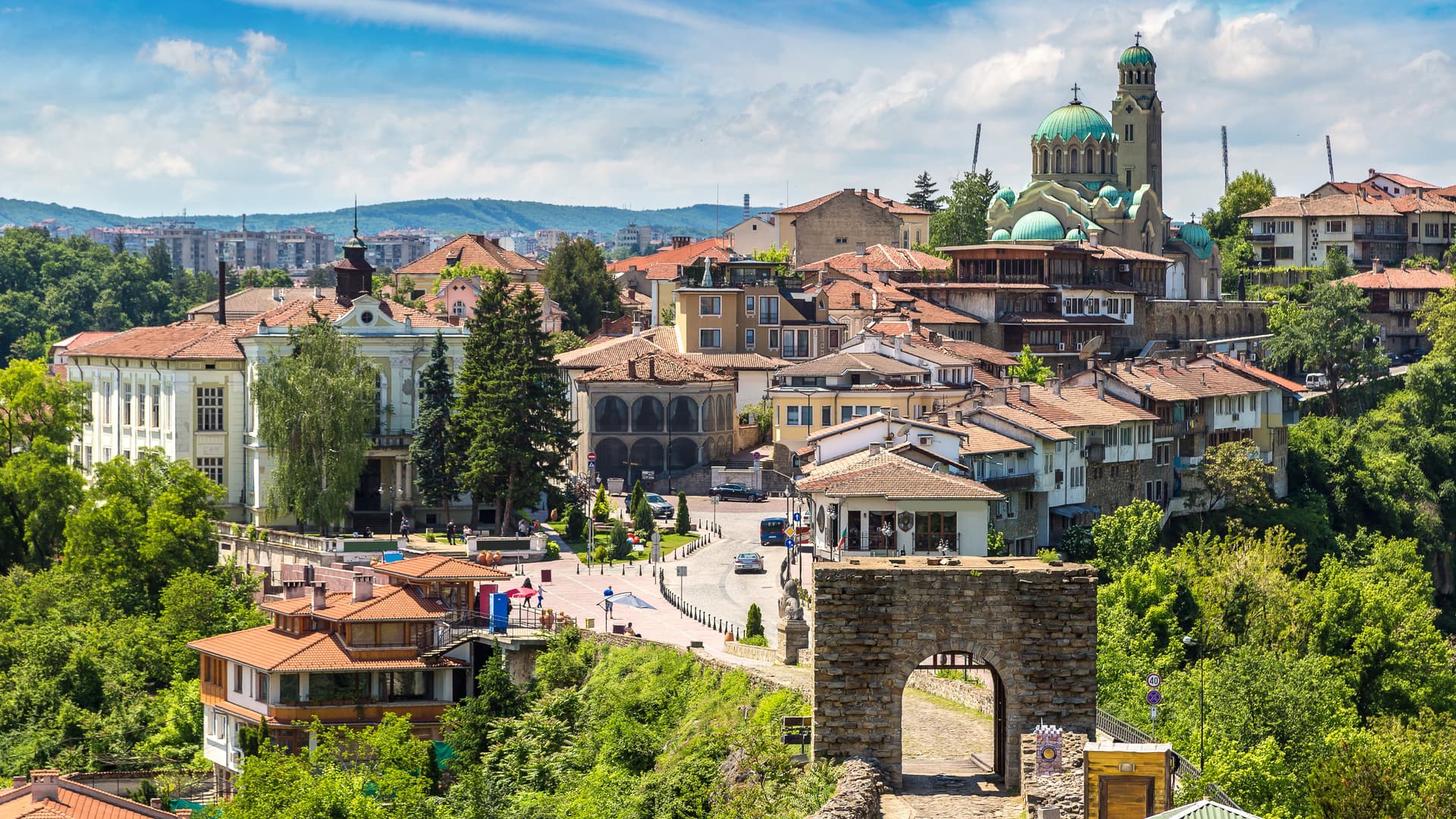
Veliko Tarnovo stretches across three hills above the deep meanders of the Yantra River, 220 km east of Sofia. Tsarevets Fortress, connected to the old town by a narrow bridge, was home to the Bulgarian tsars' court from the 12th to the 14th century, until the city's capture by the Ottomans in 1393. We guide our travelers through the cobbled lanes of Samovodska Charshia, the old bazaar where about twenty workshops still operate: potters, coppersmiths, knife makers in Gabrovo, glassblowers. The city has 65,000 inhabitants and remains vibrant thanks to its university, which brings energy to the cafes along Stefan Stambolov.
Four kilometers to the north, the village of Arbanassi preserves eighty fortified houses from the 17th and 18th centuries, built by Greek and Bulgarian merchants who traded as far as Transylvania and Venice. The Church of the Nativity, low and squat to escape Ottoman restrictions, is entirely covered with frescoes painted between 1597 and 1681: nearly 2,000 scenes, including a rare frieze of pagan Greek philosophers in Orthodox art. We enter early in the morning to avoid tour groups visiting from Veliko.
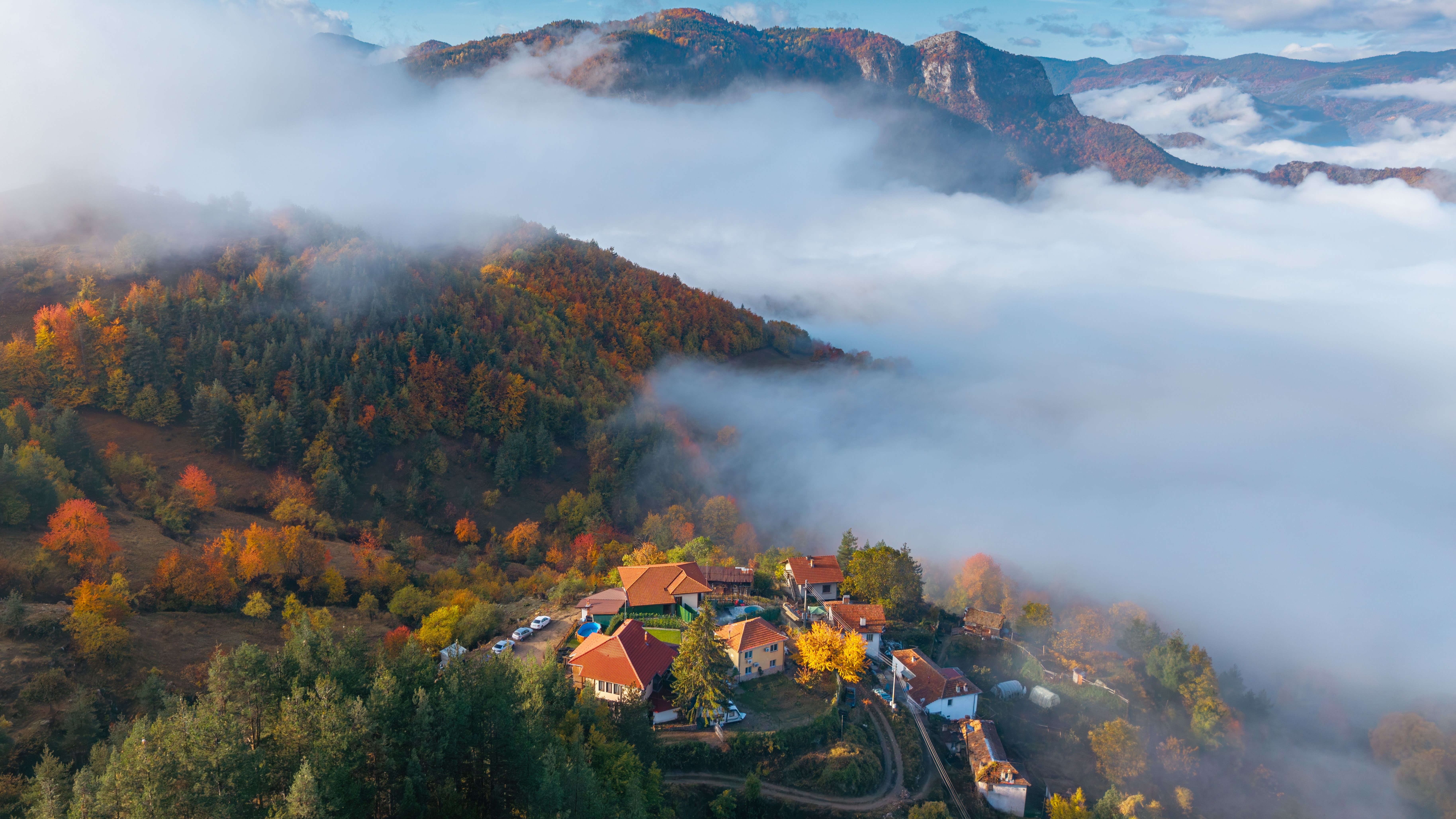
The Central Balkan, called here Stara Planina, the Old Mountain, crosses the country from west to east over 550 km. The peak of Botev rises to 2,376 m, within a strictly protected national park where a few brown bears still live and a significant population of chamois roams. South of Veliko, the Shipka Pass crosses the ridge at 1,150 m. This is where decisive battles unfolded in 1877 and 1878 between the Russian army allied with Bulgarian volunteers and Ottoman troops. The memorial monument, a stone tower 32 m high, is reached by 894 steps and offers a clear view of both slopes on clear days.
On the southern side of the pass, the open-air museum of Etara recreates a Bulgarian Renaissance village with mills, tanneries and forges still in operation, powered by the waters of the Sivek River. About thirty kilometers to the east, Tryavna has concentrated since the 18th century the country's finest school of wood carving: iconostases, ornate rosette ceilings, marriage chests. Saint Michael Archangel Church and the Daskalov House can be visited in two hours, and we take time for lunch at a family table where kapama, a cabbage and meat stew simmered for hours in earthenware, is still prepared.
The climate of this zone differs noticeably from the Thracian plain to the south: beech and oak forests remain green until October, springs are plentiful, and the air stays cooler in summer. High-altitude shepherds continue to migrate to pastures above 1,500 m between June and September, and you can still find sheep cheeses aged in storage in villages like Bozhentsi or Zheravna. This mountain identity, economically marginal today, explains the good state of preservation of stone and wood heritage.
Veliko Tarnovo is well-suited for a three-night stay, a base from which we organize excursions to Arbanassi, Etara, Tryavna and Shipka Pass, plus a day for the museum villages of Bozhentsi and Zheravna if the traveler is interested in vernacular architecture. Distances remain short, rarely more than 90 km, on winding mountain roads where you should allow 1h30 for 60 km.
Must-see
Tsarevets Fortress with light show. The citadel of Bulgarian tsars occupies a hill surrounded by the Yantra River. On certain summer evenings, a laser and bell spectacle recounts the fall of 1393 from the ramparts. Allow 1h30 to explore the site on foot.
Frescoes of Arbanassi. The Church of the Nativity houses 2,000 scenes painted between 1597 and 1681, including a rare frieze of Greek philosophers. The semi-darkness, absence of pews and stone floor maintain the atmosphere of a place still in worship.
Shipka Pass and memorial. One-hour walk from Shipka village to the Russian chapel with golden domes, then climbing the 894 steps of the Botev monument at 1,326 m. Late afternoon mists are frequent from September onwards.
Tryavna workshops. Wood carvers still active on Slaveykov Street, a school founded in the 18th century. We arrange a meeting in a family workshop to understand the technique of ornate rosette ceilings.
Etara open-air museum. Recreation of a 19th-century artisan village where mills, wool fullers and forges still operate by water power. A good stop before or after crossing Shipka Pass.
When to visit
The favorable season runs from May to mid-October. May and June offer a lush green mountain, daytime temperatures of 18 to 24°C in Veliko Tarnovo, with occasional afternoon thunderstorms on the ridges. July and August reach 28-32°C in the city but remain bearable thanks to altitude (200 m for Veliko, 1,150 m at Shipka Pass where you find 20°C). September and early October are our favorite period: dry air, forests beginning to turn golden, visitor numbers dropping sharply after September 15.
From November to March, the Central Balkan regularly receives snow above 1,000 m, passes may close for a few hours after significant snowfall, and outdoor sites like Etara operate on reduced hours. December to February suit only travelers interested in urban winter atmospheres in Veliko Tarnovo, with temperatures often around 0°C and short days. April remains rainy and mountain villages have not yet reopened all their workshops.
Practical advice
We recommend a minimum of three nights in the area, ideally four if you wish to include Bozhentsi, Zheravna and a proper half-day hike in the national park. The logistical entry point is Sofia, 2h30 by road via the Hemus motorway, or a direct flight to Bucharest then crossing the Danube at Ruse (1h30 from Veliko). Varna airport, 3h on the coast, works well if you combine with the Black Sea at the end of your trip.
The region naturally connects with Sofia and Rila to the west (allow a transition day via the monasteries of Troyan or Etropole), with Plovdiv and the Valley of Roses to the south (3h via Shipka Pass, very beautiful drive in June during harvest), and with the Black Sea coast to the east. Accommodation ranges from restored guesthouses in Bulgarian Renaissance homes in Arbanassi, to 4-star hotels in Veliko Tarnovo. This region suits travelers interested in history, vernacular architecture and moderate hiking. Families find much to enjoy thanks to short distances, and experienced hikers can tackle the Botev ascent over two days with a night in a mountain hut.